FSM Department of Health and Social Affairs

“A Nation in Crisis”: FSM Health Leaders Sound the Alarm on Non-Communicable Diseases and Commit to Bold Action

YAP, FSM – Health leaders from across the Federated States of Micronesia (FSM) gathered in Yap for a three-day national health convening, joined by FSM MiCare and development partners including the Asian Development Bank (ADB), United Nations Population Fund (UNFPA), United Nations Children’s Fund (UNICEF), and the World Health Organization (WHO). While a range of pressing health issues were addressed, the summit underscored a sobering reality: FSM is in the midst of a full-scale Non-Communicable Disease (NCD) crisis requiring urgent and coordinated action.

NCDs—including diabetes, cardiovascular disease, cancer, and chronic respiratory conditions—are now the leading cause of premature death in FSM, accounting for over 80% of such deaths. Diabetes alone contributes to nearly one in five deaths among adults aged 30–69. The economic impact is equally severe, with the nation spending approximately $6 million annually on overseas medical referrals, the majority linked to NCD complications.

Despite past efforts—including state-level emergency declarations and the adoption of national and regional frameworks—NCD risk factors remain widespread. Increasing rates of obesity, persistent tobacco and betelnut use, unhealthy dietary habits, and declining physical activity continue to accelerate the crisis. FSM health leaders emphasized that this is not a distant challenge but a current and intensifying emergency.

A virtual presentation by Dr. Peter Brett, an oncologist based in the Commonwealth of the Northern Mariana Islands (CNMI), highlighted the strong correlation between betelnut chewing and oral cancer. The presentation noted striking similarities in cancer cases between the CNMI and FSM. Dr. Brett expressed interest in collaborating with FSM to investigate trends and offer clinical services. FSM officials acknowledged the potential of this regional partnership, particularly given shared risks and geographic proximity.


Other Key Issues Addressed at the Convening of the FSM Health Directors’ Meeting

Health Dispensary Assessment
The National Assessment Team confirmed the completion of a nationwide assessment of health dispensaries. However, the publication of the report has been delayed due to missing and incomplete data from several states. The Team has been tasked to finalize the report within the next three months. Once completed, the findings will provide a critical evidence base for health leaders to advocate for greater investments from state and national governments, as well as development partners, to improve frontline service delivery across the country.

Health Workforce Development
To address urgent gaps in the primary healthcare workforce, especially in remote and outer island communities, FSM is currently exploring ways to strengthen local health education. Negotiations are underway with the College of Micronesia-FSM (COM-FSM) to revise the Health Assistant curriculum, ensuring graduates are equipped with the skills, tools, and competencies necessary to meet today’s healthcare demands. The Public Health Infrastructure Grant (PHIG) Team also presented updates on the number of healthcare staff onboarded since the program’s inception and engaged in dialogue with the states on future workforce support.  The health leadership also discussed opportunities for training of new and existing doctors, nurses, and other health workers that are in the pipeline with other partners and institutions.  It was clear that more needs to be done to attract students into medical and other health fields after high school.

Universal Health Coverage and Primary Health Care
Achieving Universal Health Coverage (UHC) remains a core commitment of FSM’s health sector. The health leadership reaffirmed that strengthening Primary Health Care (PHC) systems—particularly at the community and dispensary level—is key to achieving UHC and reducing reliance on costly off-island care. Discussions centered on expanding access to essential services, improving health literacy, and integrating care delivery across all levels of the system.

Climate Resilience & Health – Green Climate Fund (GCF) Project
On July 01, 2025, the Green Climate Fund (GCF) approved FSM’s project proposal “Increasing Resilience to the Health Risks of Climate Change”.  The project aims to address the increasing impacts of climate change from vector-, water-, and food-borne diseases.  The project will address policy, capacity and collaboration for effective management of climate-sensitive health risks, harmonize climate and health information systems, and adaptation intervention in vulnerable communities across FSM.  Funding in the amount of $17.9M is made available from GCF to support this project over the next 5 years.

FSM Competent Authority- World Bank PROPER Project
The PROPER project has three broad components and several sub-projects to be implemented collaboratively by various National and States departments/agencies/programs in support of overall fisheries and economic development in FSM.  The total budget for PROPER is $56M and DHSA’s share is $2.5M to support further development of our Competent Authority (CA) to enable FSM to access the lucrative European Union (EU) Fish Market.  The key DHSA activities to be supported by the PROPER project include: (1) strengthening of our CA through additional trainings for CA Officers, securing additional CA assets, maintenance of health and sanitary conditions of fishing vessels and processing facilities through audits, monitoring of safety of fish products through sampling and analysis for microbiological and chemical contaminants, and through other means as may be prescribed by EU Regulations; (2) establishment of a national reference laboratory to strengthen FSM’s capability to carry out required tests in-country instead of sending samples off-island for testing, and (3) improving the fish landing site structure and provisioning of safer and cleaner water to the Kosrae seaport.  All these activities will support strengthening of FSM’s CA to fishing industry and eventually gaining access to the EU market.

Vaccine Security and Management – UNICEF
UNICEF reported that FSM currently funds only the Pneumococcal Conjugate Vaccine (PCV) through Congressional appropriations, with all other vaccines provided through support from the U.S. Centers for Disease Control and Prevention (CDC). Recent U.S. funding cuts, following the enactment of the so-called “Beautiful Bill,” place FSM’s vaccine supply chain at risk. To address this, UNICEF is collaborating with GAVI, The Vaccine Alliance, to explore alternative vaccine support mechanisms and maintain uninterrupted immunization coverage.

Sexual and Reproductive Health and Rights (SRHR) – UNFPA
UNFPA highlighted the critical importance of advancing sexual and reproductive health and rights in FSM. Strengthening SRHR services is seen as vital for reducing maternal and adolescent health risks, achieving equitable health outcomes, and accelerating progress toward the Sustainable Development Goals (SDGs) and Universal Health Coverage (UHC).

Health Financing and Infrastructure – ADB
The Asian Development Bank confirmed the allocation of $4 million in health sector funding for FSM, pending national decisions on how the resources will be used. Proposed priorities include revitalizing rural health dispensaries and enhancing air and sea transport to outer islands. FSM’s recent reclassification from “low” to “moderate” debt distress also opens the possibility of accessing concessional loans alongside traditional grants, offering greater flexibility in health financing options.

Antimicrobial Resistance (AMR) and Stewardship (AMS) – FSM Pharmaceutical Unit
The FSM Pharmaceutical Unit highlighted the escalating threat of antimicrobial resistance, which is driven by inappropriate antibiotic use and poses serious public health risks. The unit called for Health Leadership commitment to strengthening of AMR and AMS committees in all states and encouraged health providers to take a more active role in promoting the responsible use of antibiotics. Recommendations also included forming national medical associations and establishing systems for clinical governance, with the National Government expressing readiness to support and fund these initiatives.


A Roadmap for the Future
At the conclusion of the convening, FSM’s health leadership endorsed the FSM Health Strategic Development Plan (HSDP) 2024–2034, a ten-year roadmap focused on advancing health equity, resilience, and sustainability. The plan outlines a unified path forward and reinforces the nation’s collective commitment to improving health outcomes for all communities.

The convening concluded with a clear message: the health of the FSM population is in crisis, and the moment to act is now.

Building Digital Citizen for a New Era – An Outcome of the FSM Digital Gender Project

FSMDigitalGenderProject_HSSurveyNarrative_Final30Jun2025_page-001
previous arrow
next arrow

The FSM Department of Health Services & Social Affairs is excited to announce the release of the key findings from the recent Digital Literacy & Access Survey conducted among high school students and staff in Pohnpei, as part of the FSM Digital Gender Project. Funded by the World Bank and led by the FSM Department of Health & Social Affairs, this survey provides critical insights into the digital landscape facing youth today. The results reveal a high level of enthusiasm for technology, with 93% of respondents eager to use digital tools, yet highlight significant challenges such as concerns over online safety, data security, and unequal access, especially in rural areas where 66.7% of participants live. Notably, nearly 19% lack consistent internet connectivity or digital devices, underscoring the urgent need for infrastructure improvements. These insights will inform tailored digital literacy programs, online safety initiatives, and infrastructure development strategies to bridge disparities and promote inclusive digital participation. The findings mark an important step forward in shaping project priorities, ensuring that all youth in FSM can safely and confidently thrive in the digital age.

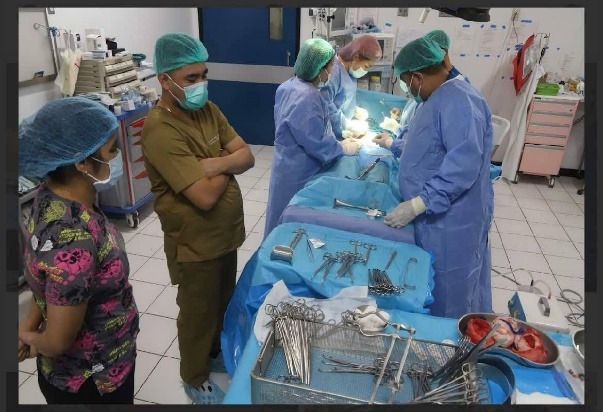
Medical Team from the Philippines Assisted Chuuk

A 14-member medical team consisting of medical doctors, specializing in obstetrics and gynecology, anesthesiology, pediatrics, surgery, public health; specialized nurses; biomedical technologists, specializing in biomedical engineering, and medical imaging visited Chuuk from May 5-18, 2025 to support Chuuk Hospital medical staff.  The team saw 235 patients and performed life-saving procedures and surgeries on 17 patients. They also fixed 29 medical equipment that had been idle; conducted basic emergency training in obstetrics and newborn care; provided prenatal care screening; and conducted continuing medical education to the local staff.

The medical team is a result of a Memorandum of Understanding (MOU) signed by the FSM Secretary of Health and Social Affairs, Mr. Marcus Samo, and the Philippines Secretary of Health, Dr. Teodoro J. Herbosa.

The Philippines Obstetrics and Gynecology visiting medical team comprised of skilled obstetricians, gynecologists, internist, anesthesiologist, pediatricians, nurses, and support staff who committed their time and expertise to support Chuuk. During their visit, the medical team conducted health assessments, provided prenatal and postnatal care, carried out surgeries, provided gynecological examinations, and even assisted in the ER. These services are necessary as they help reduce complications related to women’s reproductive health, pregnancy and childbirth.  

The team also provided continuing medical education and training to the local staff.  The experience gained by the visiting medical team and the local healthcare providers will guide how the next team from the Philippines is structured and mobilized to the FSM.  The FSM Department of Health and Social Affairs plans to bring more specialized medical team to all FSM States.

Announcement – Pertussis (Whooping Cough)

PUBLIC ANNOUNCEMENT 01-01-25-#1

JANUARY 6, 2025

The FSM Department of Health and Social Affairs is advising the public of ongoing influenza-like illness (ILI) in the FSM. ILI is an indicator for pertussis or whooping cough.

Pertussis (Whooping Cough)

Pertussis, commonly known as whooping cough, is a highly contagious respiratory infection caused by the Bordetella pertussis bacteria.  Kosrae reported 2 cases of pertussis since on October 30, 2024.  The public is advised to remain vigilant and continue preventive measures by following the recommended actions below.
Symptoms

Pertussis symptoms can vary by age and can include:

  • Severe coughing fits followed by a whooping sound
  • Difficulty breathing
  • Vomiting after coughing
  • Exhaustion after coughing fits
  • Mild fever
  • Runny nose

Complications

Complications from pertussis can be severe, especially for infants and young children.  They may include pneumonia, seizures and in some cases, death.
Recommended Actions

  1. Stay Up-to-Date with Vaccinations:  Vaccination is the most effective way to prevent pertussis.  If you are not updated with vaccination, please visit your public health clinic as soon as possible. 
  2. Practice Good Hygiene:  Wear masks if you’re feeling sick.  Cover your mouth and nose with a tissue or your elbow when coughing or sneezing. Wash your hands frequently with soap and water.
  3. Stay Informed:  Keep informed about local health advisories and reports of respiratory illnesses in your community.
  4. Seek Medical Attention:  If you or someone you know have the symptoms of pertussis, seek medical attention promptly.

Acting WHO Representative Dr. Josaia Tiko Pays Courtesy Visit to FSM Department of Health and Social Affairs

On September 26, 2024, Acting WHO Representative (WR) Dr. Josaia Tiko paid a courtesy visit to the FSM Department of Health and Social Affairs. Dr. Tiko was received by Acting Secretary Moses Pretrick and his staff, where they discussed ongoing collaborations and the support efforts provided by WHO to the Department. Dr. Tiko is serving as Acting WR for FSM, Palau, and RMI until December 2024, assisting with the transition of the WHO Office in Pohnpei from a Country Liaison Officer (CLO) to a WR office. The Department welcomes Acting WR Dr. Josaia Tiko to his new post within the FSM.

UNFPA Pacific and FSM DHSA Courtesy Meeting on MCP7 Implementation

On September 19, 2024, UNFPA Pacific Resident Representative and Director, supported by the UNFPA-FSM team, had a courtesy meeting with FSM DHSA Acting Secretary Hon. Moses Pretrick and key department staff. The objective of the courtesy meeting is to strengthen partnership and collaboration between UNFPA and DHSA, discuss the implementation of MCP7 implementation, and explore how UNFPA can better tailor its support to FSM DHSA.

1ST FSM PHARMACEUTICAL UNIT TECHNICAL COMMITTEE MEETING

August 13, 2024 – FSM Department of Health and Social Affairs successfully convened and facilitated the 1st FSM Pharmaceutical Unit Technical Committee meeting in Weno, Chuuk from August 6-7, 2024 with support from the World Health Organization (WHO). This important meeting brought together pharmacists/pharmacy supervisors from the four FSM state hospitals, and representatives from the FSM Customs and Tax Head Quarters Office, the DHSA Food Safety Program and the Pharmaceutical Unit to:

  1. Discuss, formalize and elect officers for the committee which was established to assist the Pharmaceutical Unit in ensuring public’s access to good quality, safe and effective medicines;
  2. Formulate the committee’s workplan;
  3. Review drafted regulations and guidelines for the licensing of pharmaceutical establishments in FSM; and
  4. Join the conversation to raise awareness on the new law on nicotine delivery systems including e-cigarettes.

The meeting was initially planned for three days, however, the committee managed to complete the scheduled activities within two days satisfying all the meeting objectives.

FSM Department of Health and Social Affairs and the Pharmaceutical Unit Technical Committee express their gratitude to the sponsor (WHO) and Chuuk State Health Services for hosting the meeting.

FSM Joined the Rest of the Pacific in High Level Discussions and Calls for More Investments in Gender Equality and Development

July 22-26, 2024, Majuro, Republic of the Marshall Islands – A high-level delegation from the Federated States of Micronesia (FSM) participated in the 15th Triennial Conference of Pacific Women, the 8th Meeting of Pacific Ministers for Women, and the 2024 Pacific Islands Forum Women Leaders in Majuro, Republic of the Marshall Islands. These three distinct meetings were condensed into one week, with discussions centered on gender issues informed by regional and international policy frameworks aimed at advancing gender equality.

The FSM delegation included high-level women lawmakers (National and State Senators) such as FSM Senator Perpetua S. Konman, Senator Merlynn Abello-Alfonso, Senator Yoslyn G. Sigrah, and Pohnpei State Senator Herolyn S. Movick. The delegation was also accompanied by technical and legal staff from the FSM Congress, FSM President’s Chief of Staff Mrs. Jane J. Chigiyal, and technical and legal staff from the executive branches of the FSM and State governments, as well as representatives from the Chuuk Women’s Council, a CSO/NGO.

Around 300 participants from across the Pacific attended the Triennial Conference, where key gender priorities in the region were discussed, including women’s health, gender-responsive climate justice, and the prevention of gender-based violence (GBV). The week also provided a valuable opportunity for regional partners, government representatives, advocates, and members of civil society organizations to network and share common interests.

FSM’s interventions were delivered by various members of the delegation. The 8th Meeting of Pacific Ministers for Women provided a platform for sharing achievements and lessons among Pacific countries and territories. During the meeting, Secretary Marcus Samo emphasized, “Investing in strategic and targeted measures for women’s health is not new for FSM.” The FSM was commended for its efforts to increase access to pap smear screening through its telepathology program and cervical cancer screening and testing, both aimed at ensuring that “no woman is left behind.”

Senator Perpetua S. Konman highlighted the importance of gender equality and sexual reproductive health and rights (SRHR) educational programs in primary and secondary schools, including menstrual hygiene education. Senator Merlynn Abello-Alfonso addressed the impact of climate change on human health, stating, “Our women and girls in small island states suffer disproportionately from its impacts, especially those with disabilities, and those living in remote, marginalized, or hard-to-reach areas.”

Senator Yoslyn G. Sigrah spoke on the issue of Gender-Based Violence (GBV) and its impacts on women’s lives, including limitations on their participation in economic and political platforms, education and employment opportunities in science, technology, engineering, and math (STEM), and autonomy over their own bodies and health, including sexual health.

Pohnpei State Senator Herolyn S. Movick discussed the importance of connecting Pacific regional frameworks to national institutions and mechanisms for gender. She shared that FSM has integrated gender into its laws and policies and has established a Gender Equality Policy. Senator Movick emphasized FSM’s commitment to a whole-of-government approach to mainstreaming gender across all sectors and called for regional cooperation, particularly in technical support, to ensure sustainable implementation and monitoring of gender goals in FSM.

Chief of Staff Mrs. Jane Chigiyal, who holds a key role in gender mainstreaming, advocated for the comprehensive dissemination of gender frameworks to assist government duty bearers at the national and state levels in integrating gender into their policies and programs. Her presence at the meetings reflected FSM’s commitment to advancing gender equality for sustainable development and economic growth.

The FSM delegation also paid a courtesy visit to President Hilda C. Heine of the Republic of the Marshall Islands. The visit strengthened bilateral relations and underscored the importance of cooperation between the two countries.

The FSM Delegation also underscored the urgency of addressing cervical cancer in the region, advocating for increased support in financing the Human Papillomavirus (HPV) vaccine.

While the FSM delegation’s interventions covered each main agenda point, they were encapsulated in Secretary Marcus Samo’s statement: “Advancing gender equality is not only the right thing to do. It’s good for development, and it’s good for any country’s GDP. It is everybody’s business.” Secretary Samo called for greater investment in gender equality and development.

All members of the FSM Delegation played vital roles and left with a deeper understanding of the interconnectedness of gender equality and development at both international and regional levels.

17 & Under FSM Basketball and Volleyball Games

August 9, 2024, Pohnpei State– FSM Department of Health and Social Affairs successfully hosted the second 17 & Under FSM Basketball and Volleyball Games, a crucial event aimed at promoting youth athletic development and a platform for promoting health, goodwill and unity.

Initially planned to take place in Yap but due to challenges with flight schedule the venue was changed to Pohnpei who hosted the previous year.  The Games saw athletes from Chuuk and Pohnpei come together to compete, while Yap and Kosrae were unable to participate.

The opening ceremony was held on July 31, 2024 with 107 athletes participating in basketball and volleyball. Hosted at the Pohnpei State Gymnasium, the event saw Chuuk State field one boys’ team and one girls’ team in both basketball and volleyball, while Pohnpei entered two boys’ teams and one girls’ team. The matches were fiercely competitive, showcasing the incredible skill and unwavering determination of these young athletes.

The tournament concluded on August 8, 2024, after several thrilling matches. The results are as follows:

  • Boys’ Basketball Division: Pohnpei Team 1 clinched first place dethroning the previous year’s winners., followed by Chuuk in second, and Pohnpei Team 2 in third.
  • Girls’ Basketball Division: Chuuk girls emerged as champions, also dethroning the previous year’s winners and Pohnpei girls came in second .
  • Boys’ Volleyball Division: Pohnpei Team 1 took the championship, with Chuuk securing second place, and Pohnpei Team 2 finishing third.
  • Girls’ Volleyball Division: Chuuk girls won the title, defeating Pohnpei girl’s team.

The FSM Government extends its gratitude to all who contributed to the success of this event, from the organizers to the athletes. The games not only showcased the talents of the young participants but also reinforced the importance of fostering healthy lifestyles for the future of the FSM.  Your support made this event possible, and together, we have inspired a brighter future for our young athletes. “BETTER HEALTH FOR ALL”

FSM Department of Health and Social Affairs Advances Vaccine Management Efforts

Pohnpei—July 22, 2024

Effective Vaccine Management (EVM) is crucial for the success of any immunization program. Proper storage and transportation of vaccines at recommended temperatures are critical for maintaining their potency and effectiveness, ultimately ensuring protection of the health of communities.

The FSM Department of Health and Social Affairs (DoHSA) is advancing its immunization programs with the Effective Vaccine Management (EVM) Assessment Assessor Workshop at Pohnpei State Hospital. The five-day workshop, facilitated by UNICEF and national EPI program focal points, aims to strengthen vaccine management systems across the region. It gathered immunization focal points from the four FSM state public health departments, representatives from the Palau EPI unit, and EPI specialists from the World Health Organization (WHO) in the FSM.

Chief of Public Health Dr Eliaser Johnson, speaking on behalf of Director Penias of Pohnpei State Health Department, highlighted the importance of strong coordination between state and national teams in his welcoming remarks. “Together, we can make a significant impact on public health and move closer to a world where preventable diseases are a thing of the past,” Dr Johnson stressed.

In his opening remarks, Acting Secretary of FSM Department of Health and Social Affairs Mr. Moses Pretrick underscored the workshop’s importance in equipping state EPI focal points with the latest EVM tools and methodologies. “Building local capacity for effective vaccine management assessments allows FSM to continually improve practices and enhance immunization programs,” Mr Pretrick stated.

UNICEF FSM Chief of Field Office, Mr. Cromwell Bacareza also emphasized the importance of strong partnerships for a successful EVM assessment in his introductory remarks. “Partnering with national and local health authorities is key to implementing the EVM assessment and improvement plans. Ongoing monitoring will sustain these improvements and tackle new vaccine management challenges,” Mr. Bacareza stated.

The workshop marks the first step in a comprehensive EVM assessment. Over the next few weeks, trained assessors will use EVM tool version 2.1 to evaluate nine critical areas of immunization supply chain system. UNICEF will then assist in analyzing the data, compiling the report, and developing the Effective Vaccine Management Country Improvement Plan (EVM cIP).

The FSM Department of Health and Social Affairs thanks UNICEF for its ongoing support and all participants for their active engagement in the effective vaccine management assessment. This collaboration is vital for advancing immunization efforts and improving public health outcomes.