
Palikir, Pohnpei — June 2026
The Federated States of Micronesia (FSM) participated in the 79th World Health Assembly (WHA79) held in Geneva, Switzerland, from May 18–23, 2026, joining health leaders from around the world to discuss global health priorities and shape international health policy.
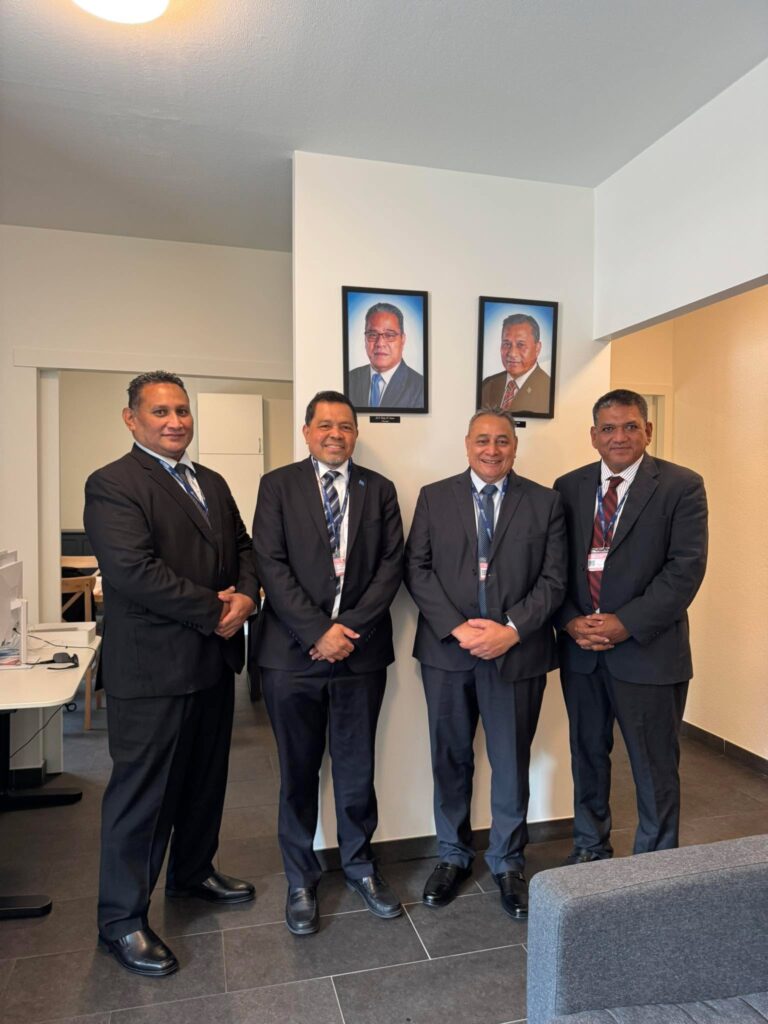
The FSM delegation was headed by Mr. Moses E. Pretrick, Assistant Secretary for Health, and included Mr. Johnny Hadley, First Secretary for the FSM Permanent Mission in Geneva, and Mr. Stanley Mickey, Program Manager for Maternal and Child Health, and Mr. Ruotpong Pongliyab, Director for Public Health and Hospital Emergency Preparedness.
As the supreme decision-making body of the World Health Organization, the World Health Assembly provides Member States with a unique platform to influence global health policy while ensuring that the voices of countries of all sizes are heard. For Small Island Developing States (SIDS) like the Federated States of Micronesia, participation is particularly important, offering an opportunity to highlight the distinct health challenges faced by remote island nations.
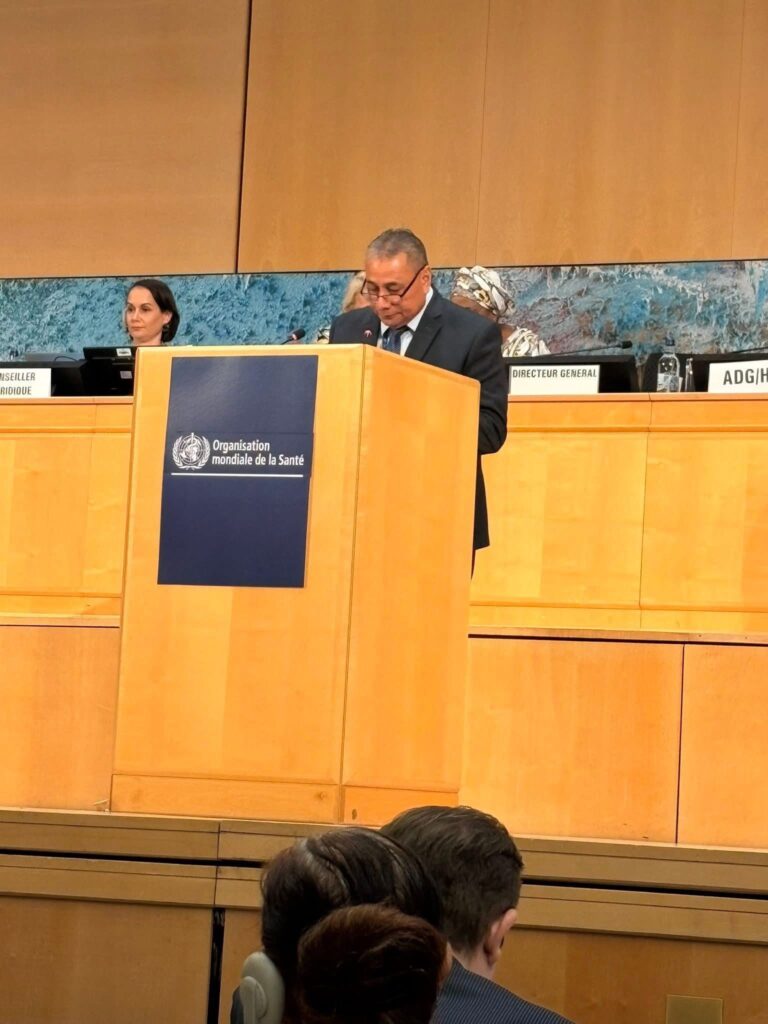
In his statement on the WHA79 theme, Assistant Secretary Pretrick emphasized that “Reshaping Global Health: A Shared Responsibility means strengthening and integrating immunization, mental health, emergency preparedness and response, digital health and surveillance, and community-based health prevention, promotion and protection services into primary healthcare to tackle our every day health challenges, and as the foundation of universal health coverage.”
Throughout the WHA, the FSM delegation delivered additional interventions and participated in discussions on issues including health emergency preparedness, climate change and health, universal health coverage, primary health care, non-communicable diseases, maternal and child health, and strengthening resilient health systems.
FSM’s statement and interventions emphasized the realities of delivering healthcare across widely dispersed islands, the increasing impacts of climate change on public health, limited health workforce capacity, and the need for sustained international partnerships to build resilient and equitable health systems.
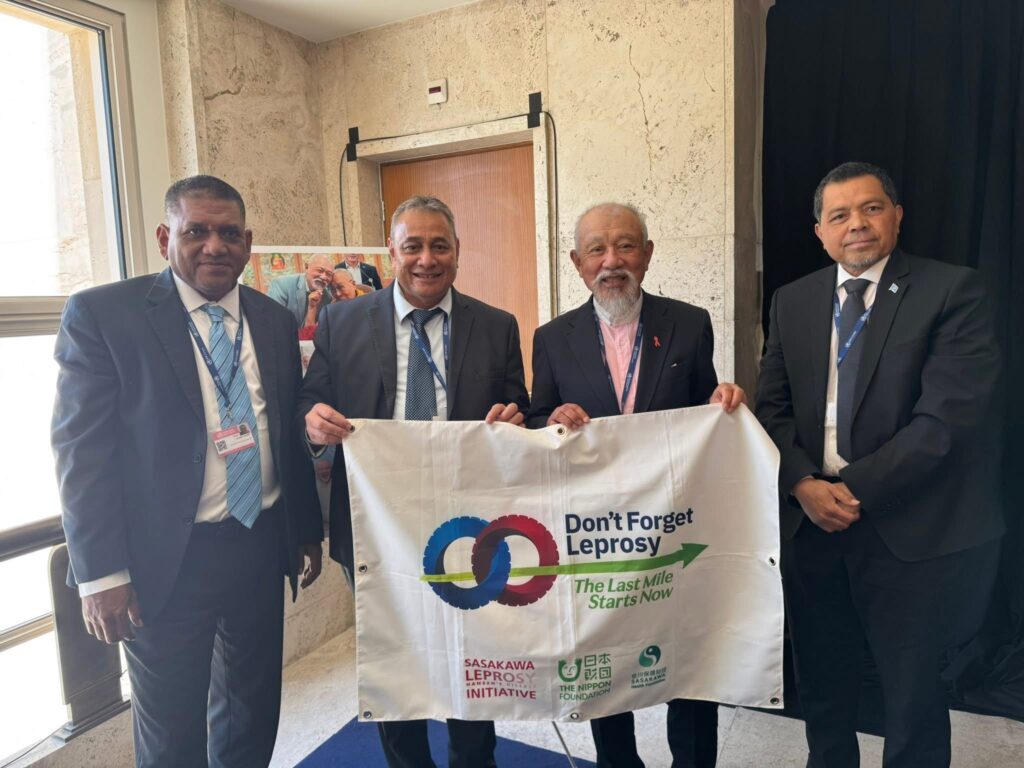
The FSM delegation also met with representatives from the World Health Organization, development partners, the Sasakawa Foundation, and fellow Pacific Island countries to strengthen collaboration on public health priorities and explore opportunities for continued technical cooperation.
FSM remains committed to working alongside its regional and international partners to improve health outcomes and strengthen preparedness for future public health challenges.
Participation in the World Health Assembly reflects the nation’s continued commitment to ensuring that the voices of the Pacific are represented in shaping the future of global health.
